عَن مَهْل
A newspaper for people learning Arabic. Every story is written three times — beginner, intermediate, advanced — fully vowelled, with a dictionary that opens on tap and shows the triliteral root, and audio slow enough to follow with your eye.
The problem it exists for
People learning Arabic fall off a cliff. On one side there is teaching material: sentences built to demonstrate a grammar point. On the other there is real journalism: dense, unvowelled, assuming cultural context you do not have yet. Between the two there is no step. Learners spend years unable to read a newspaper, and most give up before they get there.
Arabic adds an obstacle other languages do not have. The tashkīl — the marks that tell you how a word is pronounced — are left out of almost all adult text. To a native reader they are redundant. To a learner they are the difference between reading and guessing. German has langsam gesprochen, French has français facile. Arabic, for the most part, has nothing.
How a story is made
Not one text cut down three ways. Three texts, written from the same fact, each obeying a written measure — length, sentence length, which grammatical structures are allowed at which level, how many new words may appear. The measure is public and parts of it are enforced automatically every time the site is built.
Every word marked in red is glossed with its root, because that is how Arabic actually organises its vocabulary. Learning that كتب generates book, writer, library and office teaches six words instead of one.
ما لَيسَت هٰذِهِ الصَّحيفَة
These are not reported news stories. They are original teaching texts about plausible situations, written to carry useful vocabulary. We have no reporters and no newsroom. No story here describes a specific event in a specific place, no quote is attributed to a real named person, and there are no photographs — for the same reason: a photograph claims someone was there, and nobody was.
Every page says so, and it will keep saying so until the project does real reporting with real provenance. That would be an editorial decision, not a feature.
How it is written, plainly
The Arabic texts are drafted with the help of a language model and directed and edited by the maintainer. They have been through one systematic grammatical pass, which found and fixed sixteen errors — thirteen of them the same mistake, case endings quietly lost on glossed words.
They have not yet been reviewed by a native speaker. That is the most important open task in the project, and the reason this page ends with an ask rather than a boast. A model gets vowel marks wrong with complete confidence, and a learner has no way to detect the error — they trust us. Until a native teacher has been through the corpus, treat the vocalisation as careful but unverified.
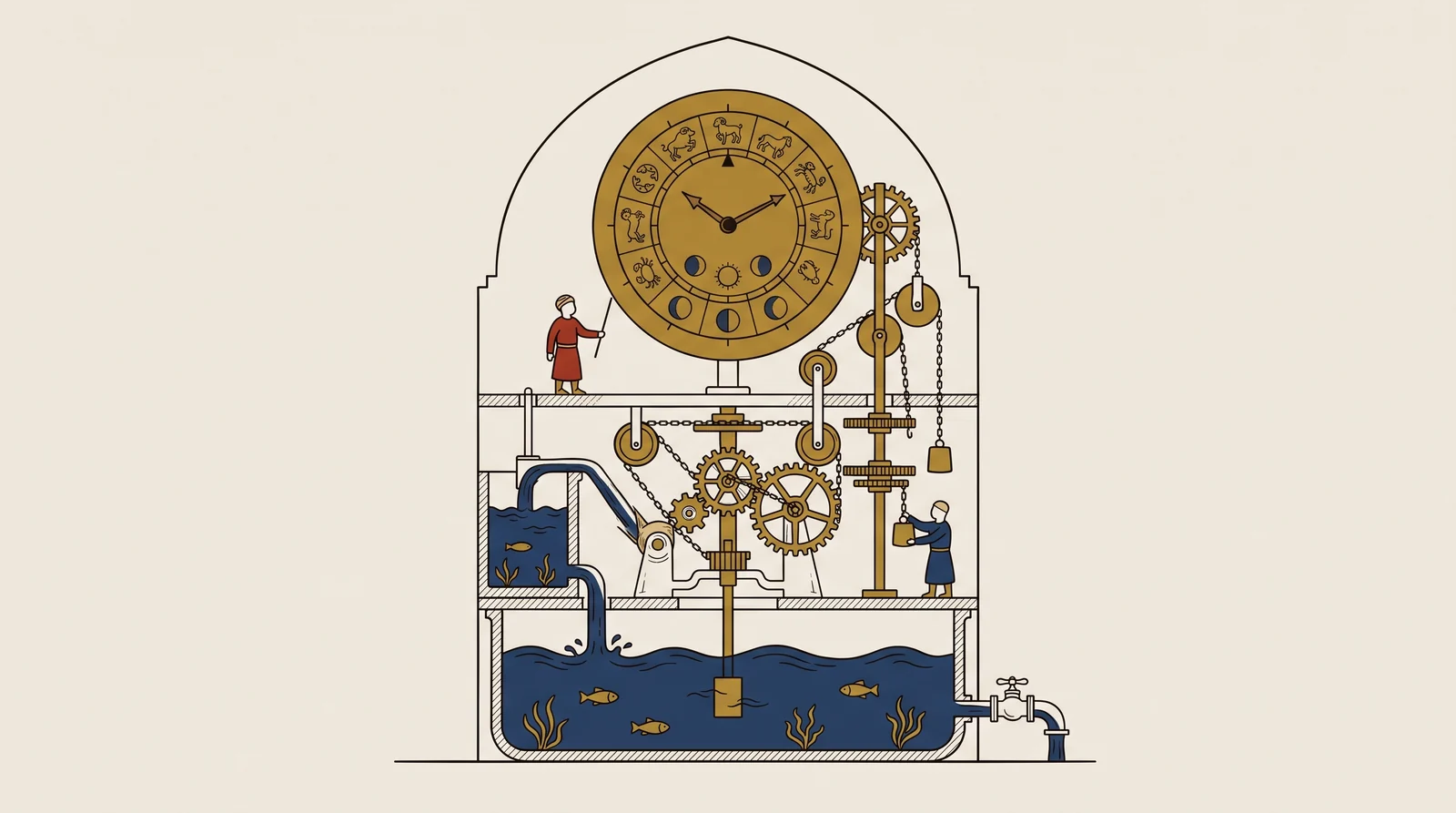
Illustrations follow a written policy: no photographs, no photorealism, and every image carries a visible note saying how it was made.
Who makes it
Mahl is an open project maintained by Gabriel Rondon. The code is MIT licensed; the editorial content — texts, glossaries, roots, audio — is CC BY-SA 4.0, so the corpus stays open to anyone who improves it. The typeface is Amiri, under the SIL Open Font License.
The two things needed most right now are native Arabic review and glosses in more languages. How to help →